Complete Guide to Color Consistency Control in Bulk Lingerie and Swimwear Production

Bulk lingerie and swimwear color consistency requires one controlled approval reference, traceable material and dye lots, evaluation under agreed lighting, defined visual or instrumental tolerances, and inspections before cutting and shipment. Fabric, lining, elastic, lace, thread, and trims must be checked separately and together because composition, texture, gloss, and stretch affect perceived color.
- The approved standard and its owner must be unambiguous.
- Do not mix unapproved dye lots during cutting or assembly.
- Evaluate components under specified light sources and in garment form.
- Agree acceptance criteria and evidence before production begins.
Establish the reference hierarchy
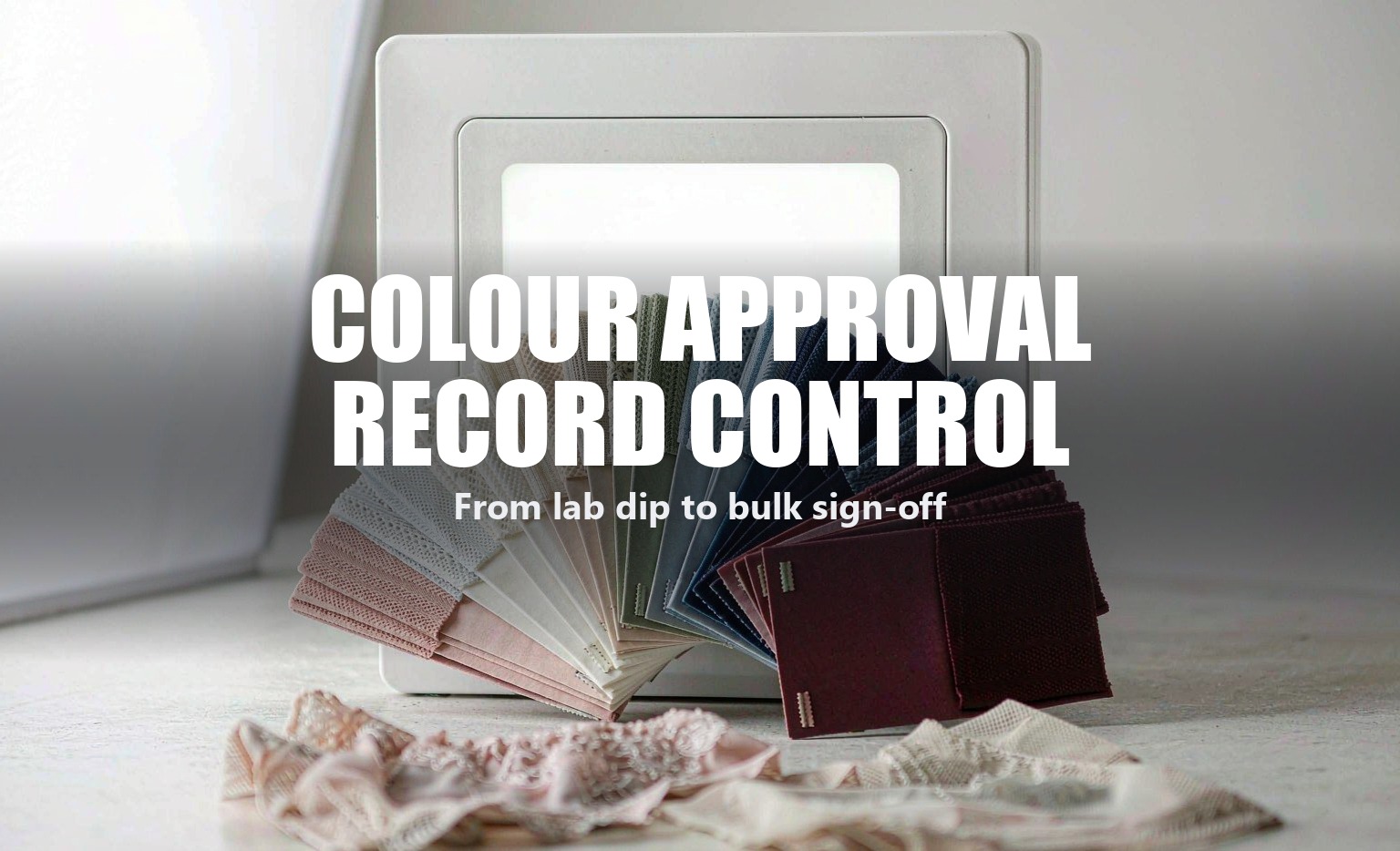
Identify the master color, approved Lab Dip, approval date, material, light sources, and authorized approver. Follow a documented Lab Dip approval process; photographs or screen colors should not replace a physical or measured reference.
Assess pre-production risks
Map fiber composition, finishes, supplier, dye method, stretch, texture, and exposed components. Review fabric, lining, elastic, lace, thread, hardware, and labels together through controlled color assessment.
Control bulk lots before cutting
Record roll and lot identities, segregate lots, inspect roll-to-roll and within-roll shade, and obtain disposition for deviations. A defined dye-lot variation control plan reduces accidental mixing.
Inspect assemblies and finished goods
Check matched sets, body-to-lining relationships, seams, panels, replacement components, and packed goods. Quarantine failures, document the decision, and ship only accepted lots.
No. Buyers should agree the instrument settings, specimen preparation, tolerance, visual review, and treatment of component-to-component effects.
Different fibers, surfaces, gloss levels, stretch states, and light sources can alter appearance even when components share a color name.
Request signed approvals, lot and roll records, lighting conditions, measurement reports where used, inspection results, deviation approvals, and corrective-action records.
Color control and procurement decisions
The International Commission on Illumination explains colorimetric systems in CIE 015:2018 Colorimetry. This supports using specified measurement conditions rather than treating a color name as objective evidence. For buyers, the instrument, geometry, illuminant, observer, and calculation method should be recorded.
ASTM International D1729 describes controlled visual appraisal of color differences. It supports using standardized viewing conditions; procurement teams should therefore define light sources and specimen presentation instead of approving color under uncontrolled office lighting.
The ISO 105-J03 standard overview specifies calculation of textile color differences. It provides a calculation framework, not a universal pass limit, so the buyer and supplier must agree color acceptance criteria before bulk production.
Control gates and evidence
| Gate | Buyer decision |
|---|---|
| Pre-production | Approve reference, lighting, tolerance, and component relationship. |
| Before cutting | Accept, segregate, rework, or reject each bulk lot. |
| Final inspection | Confirm set matching, traceability, and shipment disposition. |
Evidence should connect every decision to a material, lot, date, approver, result, and disposition. A consistent color approval record management system helps buyers investigate replenishment differences and assign corrective action. During supplier evaluation, ask who owns each gate, what happens after a failure, and whether records can be produced before shipment.
Standard Lab Dip Workflow for Lingerie and Swimwear OEM Projects